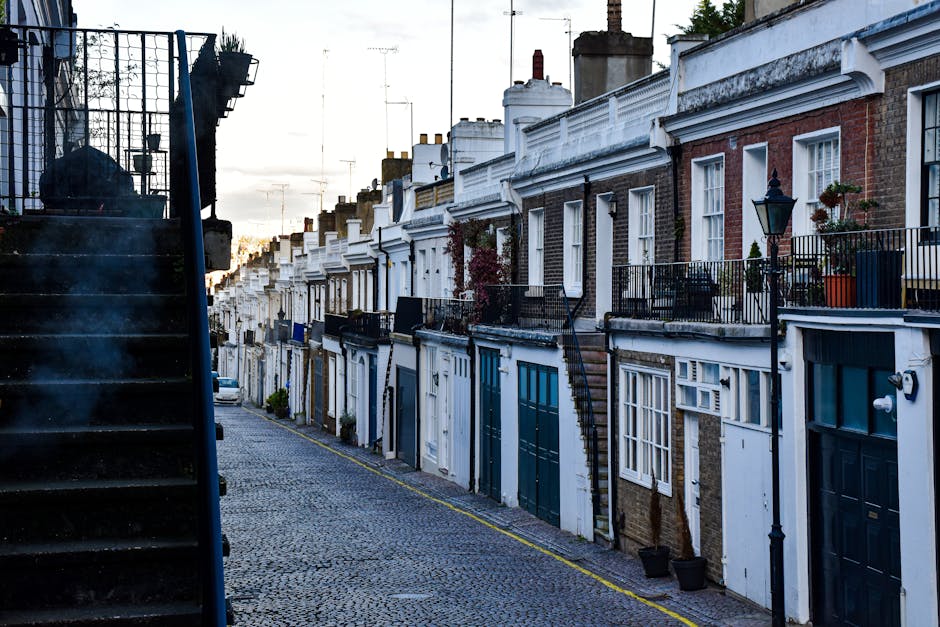
Salusbury Road NW6 Removals Tips for Narrow Streets
If you are planning a move on Salusbury Road NW6, you already know the problem: the street can look simple on a map and feel very different on moving day. Tight parking, passing traffic, awkward loading space, and rows of parked cars can turn a normal removal into a bit of a puzzle. These Salusbury Road NW6 removals tips for narrow streets are designed to help you avoid the usual headaches, keep everything safer, and make the day feel controlled rather than chaotic.
The good news? With the right preparation, a careful unloading plan, and a vehicle that actually suits the road, moving in this part of NW6 becomes much more manageable. You do not need to wing it. You need a clear plan, a realistic schedule, and a few practical decisions made before the first box is lifted.
Below, you will find a structured guide covering access, parking, packing, timing, safety, local best practice, and a realistic checklist you can use on the day. A move on a narrow London street does not need to be stressful. Honestly, it often just needs a bit of forethought.
Why Salusbury Road NW6 Removals Tips for Narrow Streets Matters
Narrow streets change everything. On a wider road, you can sometimes arrive, park close to the front door, and get moving. On Salusbury Road NW6, the reality is usually more layered. There may be passing traffic to account for, limited kerb space, residents' vehicles, delivery vans, and pedestrians who are trying to get on with their day. That means a small delay can ripple through the whole move.
This matters for three main reasons. First, access affects labour time. If a van cannot stop close enough, every item takes longer to move. Second, it affects safety. Carrying furniture further than expected, especially through a busy street, increases the risk of knocks, trips, and strain. Third, it affects neighbour relations. Nobody wants to be that move blocking a lane, not even for ten minutes. Truth be told, narrow-street removals are as much about diplomacy as logistics.
There is also the weather to think about. A dry morning can become a damp one by lunchtime, and a narrow pavement can get slippery fast. So these moves are not only about convenience; they are about reducing avoidable problems before they begin.
Expert summary: The smoother the street access, the faster and safer the move. Most removal-day stress on Salusbury Road NW6 comes from poor parking, poor timing, or poor packing rather than the move itself.
How Salusbury Road NW6 Removals Tips for Narrow Streets Works
The basic idea is simple: you reduce pressure on the street by planning the move around access instead of trying to improvise on arrival. That usually means deciding where the removal van will stop, how long loading is likely to take, which items should come out first, and whether any part of the move needs to be split into smaller trips or staged from inside the property.
In practice, a narrow-street move works best when the team treats the street like part of the property layout. That may sound a little odd, but it is true. If the van is too large for the road, or if the loading point is too far from the entrance, the job becomes heavier and slower than necessary. Choosing the right vehicle matters, which is why services such as a man with van or a smaller removal van can be a better fit than a large truck for some local moves.
Many local movers also find that short-notice jobs, student moves, and flat moves benefit from smaller-scale support. If your move is from a top-floor flat or you are shifting a few bulky pieces rather than a full household, options like flat removals, student removals, or even same day removals can make the process more realistic.
The working pattern is usually this: assess access, confirm the best arrival window, protect key items, load strategically, and keep the street footprint as small as possible. Simple enough on paper. In real life, a good move depends on sticking to that plan even when the day gets a bit noisy.
Key Benefits and Practical Advantages
Careful planning for narrow streets gives you more than convenience. It changes the whole tone of the move.
- Less wasted time: When the van can park close to the property, loading is faster and smoother.
- Lower risk of damage: Shorter carrying distances mean fewer chances to bump walls, railings, door frames, or other parked vehicles.
- Better safety: Heavy lifting over a shorter route is easier on backs, shoulders, and hands.
- Less stress for neighbours: A tidy, efficient loading plan helps keep paths and traffic flow clear.
- More predictable costs: If the move is efficient, there is less chance of time overruns caused by poor access.
- Improved packing discipline: When you know space is tight, you pack more carefully, label better, and waste less time searching later.
There is a quieter benefit too. You feel more in control. Moving is messy enough without adding traffic pressure and awkward carry routes. A good plan gives the day shape, and that makes a real difference.
Who This Is For and When It Makes Sense
This kind of guidance is useful for anyone moving to, from, or around Salusbury Road NW6, but it is especially valuable if you are dealing with one or more of these situations:
- you live on a narrow residential street with limited waiting space
- your building has stairs, a tight hallway, or no lift
- you are moving furniture, not just bags and boxes
- you need a van that can load quickly without blocking the whole road
- you are relocating a one-bedroom or two-bedroom flat
- you have a school run, commuters, or busy foot traffic to consider
- you need help with heavy or awkward items, such as wardrobes or sofas
It also makes sense for business moves. Small offices, studios, and shared workspaces can have just as much access trouble as homes. If the move involves equipment, files, and furniture, then a local office removals or commercial moves approach may be more suitable than trying to do everything in one rush.
And yes, if you are staring at the street the night before and thinking, "How on earth is the van meant to fit here?", that is usually the point where proper planning pays off.
Step-by-Step Guidance
1. Check access before move day
Walk the route from the street to the front door. Look at kerb space, parking restrictions, low walls, parked cars, narrow gates, and any turns the team will need to make. If there is a tricky corner or a very tight entrance, measure it. Do not guess. Guessing is how people end up with a sofa wedged halfway through a doorway, which is never a cheerful moment.
2. Choose the right vehicle size
On narrow streets, smaller often works better. A compact van may allow closer parking and quicker loading than a larger vehicle. That does not always mean fewer trips, but it often means less time spent trying to manoeuvre into position. If the job is substantial, speak to a provider about whether a moving truck or a smaller setup is more realistic for the road.
3. Book the right time slot
For a street like Salusbury Road NW6, timing matters as much as transport. Early morning can be calmer. Midday may bring more foot traffic. School-run hours and local delivery windows can make the street feel tighter than it looks. If you can, book a slot that avoids the busiest period. It sounds obvious, but plenty of moves forget this until the van is already there.
4. Reserve the carrying route inside the property
Clear hallways, remove loose mats, hold doors open safely, and make sure the shortest path is available. If the front path is cluttered with shoes, plants, bikes, or rubbish bags, tidy it the day before. In a narrow-street move, every extra obstacle seems twice as annoying because you notice it again and again.
5. Pack with loading order in mind
Put heavy, sturdy items in smaller boxes, and keep fragile items clearly marked. Label boxes by room and note if something needs to stay on top. The loading order matters too. Bulky items such as mattresses, headboards, or wardrobes often need to go in first, while lighter boxes can fill the gaps. A service like packing and boxes can help if you want the packing done in a more systematic way.
6. Protect shared spaces
Use blankets, corner guards, and door protection where needed. This is especially useful in older buildings or flats with tight communal areas. Damage in a narrow stairwell is easy to cause and expensive to explain. Better to prevent it than apologise later.
7. Load methodically and communicate clearly
One person should direct the load sequence if possible. That keeps the van balanced and avoids confusion. If the team is carrying from multiple rooms, tell them which items are most urgent, which are fragile, and which should stay accessible. Straightforward communication saves time. Every time.
8. Leave a final sweep for small items
Check cupboards, behind doors, under sinks, and on window ledges. Narrow-street moves are often busy and slightly rushed, so little things get missed. A final sweep takes five minutes and can save a second journey, which nobody wants at the end of a long day.
Expert Tips for Better Results
Over time, you start noticing the small choices that make difficult moves easier. These are the details people miss when they only think about the van itself.
- Use smaller, heavier boxes for books and kitchenware. Big boxes are tempting, but they become awkward very quickly on stairs and in tight doorways.
- Break down furniture early. Flat-pack pieces, bed frames, and removable legs should be disassembled before moving day if possible.
- Keep one essentials bag separate. Put kettle, chargers, medication, documents, snacks, and a change of clothes in one bag you can reach quickly.
- Wrap items before moving them to the door. Don't wait until they are already in the hallway.
- Leave a walking lane clear. A cluttered corridor is one of the fastest ways to slow the whole job down.
- Tell the movers about awkward items upfront. Pianos, mirrors, antique cabinets, and oversized wardrobes need different handling. No surprises, please.
If you have particularly heavy or delicate pieces, specialist support can be worth it. For example, a piano removals service is a far better fit than trying to move a keyboard on a hope and a prayer. Likewise, careful handling for sofas, tables, and storage units may be easier through furniture removals or a broader removal services booking.
One small but valuable trick: photograph the route before the move. Not because it looks fancy, just because it helps you remember where the pinch points are. You will thank yourself later, probably while standing in the hallway with a lampshade in one hand.
Common Mistakes to Avoid
Most problems on narrow streets come from a handful of predictable mistakes. Once you know them, they are easier to dodge.
- Booking a van that is too large: If the vehicle cannot stop safely, everything becomes slower.
- Leaving packing until the last minute: Rushed packing leads to weak boxes, poor labelling, and breakages.
- Ignoring building access: Tight stairwells and narrow landings can make large items far more difficult than expected.
- Assuming parking will sort itself out: It often does not. Especially not on a busy London street.
- Forgetting to tell neighbours: A little courtesy goes a long way when access is tight.
- Not planning for weather: Rain changes grip, visibility, and how long loading takes.
- Trying to move everything in one giant rush: It sounds efficient, but it usually backfires.
There is also the classic mistake of thinking "we'll just manage". Sometimes you can. Sometimes you cannot. On a narrow street, that attitude can become expensive very quickly. A little realism goes a long way.
Tools, Resources and Recommendations
You do not need a warehouse full of kit, but a few basics make a narrow-street removal much easier:
- strong packing tape and tape dispenser
- sturdy boxes in a few sizes
- protective blankets or wraps
- marker pens for clear labelling
- gloves with a decent grip
- door wedges or simple door protection
- trolley or sack barrow for heavier boxes, if appropriate
- plastic covers for mattresses and upholstered pieces
If packing feels like the hardest part, using packing and unpacking services can remove a surprising amount of pressure. It is not just about convenience. It also improves consistency, which matters when you are trying to move efficiently through a tight loading area.
For people between homes, or those whose move needs to be split over several days, storage can be useful. That is especially true if one property is ready before the other, or if you need to reduce the number of items on the street at any one time.
If you are comparing providers, it is worth looking at service scope, flexibility, and how they discuss access issues. A trustworthy team should be willing to talk through the street layout, carry distance, and any awkward items before the move begins. You should never feel like you are guessing the process from a phone call that lasts 40 seconds.
Law, Compliance, Standards, or Best Practice
For local removals in London, the big compliance themes are usually practical rather than dramatic: parking awareness, safe lifting, road safety, and courtesy to neighbours and building occupants. If you are arranging a move on a narrow street, it is sensible to think in terms of best practice rather than assuming there is one universal rule that fits every situation.
That means checking parking restrictions carefully, avoiding obstruction where possible, and making sure the loading arrangement does not create unnecessary danger for pedestrians or other road users. If a property has shared entrances, blockages become more than an inconvenience; they can affect access for everyone in the building.
For moving teams, health and safety should cover lifting technique, manual handling, protecting the route, and keeping the workspace clear. If you want to understand how a provider approaches these issues, their health and safety policy and insurance and safety information are sensible places to look. It is boring to read, sure, but boring is what you want here.
Best practice also includes clear terms, transparent pricing, and careful handling of personal information and payments. For that reason, a provider's pricing and quotes, payment and security, terms and conditions, and privacy policy can tell you a lot about how professionally they work.
Options, Methods, or Comparison Table
Not every move on a narrow street needs the same solution. The right method depends on what you are moving, how much access you have, and how much time you can spare.
| Method | Best for | Strengths | Trade-offs |
|---|---|---|---|
| Small van move | Flats, light household moves, quick loading | Easier parking, better access on narrow streets, often faster close-up loading | May need more than one trip for larger moves |
| Standard removal service | Full-home moves with mixed furniture | More capacity, more structured loading, better for larger volumes | May struggle if the street is very tight |
| Specialist packing support | Busy households, fragile items, time-poor movers | Better protection, less stress, faster move day prep | Extra planning required in advance |
| Storage-first approach | Staggered moves, delayed completion, downsizing | Reduces pressure on the street and inside the property | Not ideal if you want everything moved in one day |
If you are unsure which route fits your situation, a conversation with removals specialists is often the simplest next step. For smaller homes or mixed loads, home moves or house removals may be the better fit. The answer is not always the biggest vehicle. Sometimes it is the smartest one.
Case Study or Real-World Example
Here is a realistic example. A two-bedroom flat move on a narrow NW6 street, with residents' parking already busy and a staircase that narrowed near the top landing. The client initially thought a larger van would be more efficient. After a quick access review, it became clear that parking close to the property was more valuable than loading maximum volume in a single run.
The move was handled with a smaller vehicle, pre-packed boxes, and a clear sequence: sofas and larger furniture first, then labelled boxes by room, then final loose items and essentials. One person stayed focused on the hallway so that no one had to backtrack through the flat repeatedly. It was not flashy. It was just organised.
The result? Less waiting, fewer bumps, and no awkward stand-off with a passing car. The client later said the part that surprised them most was not the speed; it was how calm the day felt. That is usually the real win on a narrow street. You are not trying to set a record. You are trying to get everything done cleanly.
A similar approach can work for students, downsizers, or renters leaving a flat at the end of a tenancy. If the load is modest, a man and van style move can be ideal because it keeps the footprint small and the process flexible. Slightly old-fashioned phrase, but it still does the job.
Practical Checklist
Use this checklist the day before and again on the morning of the move:
- confirm the arrival time and access details
- check parking restrictions and loading options
- measure any very large furniture pieces
- disassemble items that can be safely taken apart
- label every box clearly by room and priority
- pack an essentials bag for the first night
- clear hallways, stairs, and doorways
- protect floors, corners, and door frames where needed
- notify neighbours if access may be tight
- keep drinks, snacks, and phone chargers handy
- make sure keys, documents, and valuables stay with you
- do a final walk-through of cupboards, loft spaces, and storage areas
Quick reminder: if your move is unusually time-sensitive, complex, or packed with bulky furniture, ask whether furniture removals, house removalists, or a more tailored service setup would be more practical than a standard one-size-fits-all approach.
Conclusion
Moving on Salusbury Road NW6 does not have to be a battle with the street. If you plan for the narrow access, pick the right vehicle, pack with care, and keep the loading route clear, the whole day becomes more manageable. That is really the heart of these Salusbury Road NW6 removals tips for narrow streets: do the small things well and the big things stop feeling quite so big.
To be fair, a tight London street will always ask for a bit more patience than a suburban driveway. But with the right preparation, you can keep the move calm, tidy, and efficient. And calm counts for a lot when you are carrying a table down stairs.
If you are still weighing up the best approach for your move, take the time to compare access, vehicle size, packing support, and timing before booking. A slightly slower decision now can save you a very busy morning later.
Get a free quote today and see how much you can save.
Frequently Asked Questions
What is the best vehicle for narrow streets on Salusbury Road NW6?
Usually the best vehicle is the smallest one that can still carry your load efficiently. A compact removal van or a man-and-van setup often works well because it is easier to position close to the property.
How early should I book a removal for a narrow London street?
As early as you can, especially if you need a specific time window. Narrow streets are more sensitive to traffic patterns, so flexibility matters. Early booking also gives you time to assess access properly.
Should I pack differently for a move on a tight street?
Yes. Use smaller boxes for heavier items, label everything clearly, and avoid overfilling large boxes. That makes carrying easier and keeps the load safer when space is limited.
Do I need to tell neighbours before moving day?
It is not always required, but it is a very good idea. A simple heads-up helps if the van needs access close to the building or if the hallway and pavement will be busy for a short period.
What should I do if parking is very limited?
Plan the parking point in advance and speak with your mover about the street layout. If parking near the entrance is impossible, the team may need a smaller vehicle or a different loading plan.
Are same-day removals suitable for Salusbury Road NW6?
They can be, if the move is relatively straightforward and access is clear. For a tight street, though, same-day work is easier when the load is modest and the property is ready to go.
How can I reduce the risk of damage in a narrow hallway?
Protect corners, clear the route, remove clutter, and make sure large furniture is measured before moving. Taking doors off hinges can help in some situations, but only if it is safe and practical to do so.
What kind of move is best for a flat on a narrow street?
Flat moves often suit smaller, well-organised vehicles and careful loading. If you are moving from an upper floor, services such as flat removals can be more appropriate than a larger general move.
Can storage help with a narrow-street move?
Yes. Storage is useful when you want to split the move into stages, reduce the number of items going out at once, or wait for a second property to become ready.
What should I ask a removal company before booking?
Ask how they handle narrow access, what vehicle they recommend, how they protect property and furniture, and what happens if parking is tight on the day. It is also wise to ask about pricing, insurance, and terms up front.
Is it better to move in the morning or later in the day?
Morning often works better on busy streets because traffic and parking pressure are usually lower. That said, the best time depends on your exact property, local traffic flow, and the mover's availability.
What if I have heavy or awkward items like a piano or large wardrobes?
These items need special handling. Piano removals, furniture removals, and proper disassembly can make the move safer and reduce the chance of damage to both the item and the building.
Sometimes a good move is just a well-timed, well-packed, well-measured one. Not glamorous, maybe. But it gets you home, and that is the bit that matters.